Is There an Official Antarctica Cruise Age Limit? IAATO Minimum Age Explained
There is no single global regulator that sets a binding antarctica cruise age limit. The International Association of Antarctica Tour Operators (IAATO) coordinates member operators on shared standards for site visits, wildlife-distance protocols and passenger caps per landing. Its guidance functions as advisory coordination among members, not a universally enforceable mandate that applies automatically to every voyage or every operator worldwide.
Within that advisory framework, an age of approximately 5 years old is sometimes referenced as a baseline discussion point among member organizations. This figure should be read as advisory guidance rather than a rule a passenger can cite as binding on any specific operator. It informs how member companies think about young children on landings, but it does not override an individual operator's own booking terms.
In practice, the antarctica cruise age limit that actually governs a booking is the one published in that operator's own terms and conditions. Each company sets its own minimum age, and these figures vary meaningfully - a distinction that matters far more to a traveler planning a trip than the advisory backdrop IAATO provides. The next section breaks down how those operator-level minimums typically differ by age band.
Antarctica Cruise Minimum Age Requirements Explained
Operator-set minimum ages for Antarctic voyages are not uniform across the industry. Depending on the company, vessel size and itinerary, published minimums commonly fall at 6, 8, 10 or 12 years old, with some expedition programs setting the bar at 16 for specific adventure add-ons such as kayaking or camping. No single number applies industry-wide, and travelers should always confirm the figure directly with the operator they are considering rather than assuming a standard applies.
What differs across these thresholds is not just whether a child can board, but what they can access once onboard and ashore. Younger age bands typically come with tighter guardian-supervision requirements, restricted access to optional adventure activities, and closer staff oversight during Zodiac landings. Older age bands usually unlock more independence, broader activity access and, in some cases, lighter supervision ratios.
What Changes at Age 8 vs. 12 vs. 16
Age 8
- Limited to core landings; adventure add-ons typically excluded
- Continuous guardian supervision required on Zodiacs and shore visits
- Little independent movement; grouped with family unit at all times
Age 12
- Access to most standard shore excursions and lectures
- Guardian must remain reachable but supervision ratio loosens
- Some independent participation in onboard programming
Age 16+
- Eligible for kayaking, camping and other adventure add-ons
- Guardian consent required in writing; direct supervision reduced
- Can typically join activity groups independent of family unit
Antarctica Cruise Age 8 - Among the Youngest Accepted Travelers
Age 8 sits near the lower end of what most Antarctic operators will accept, and it is far from universal - several companies set their floor higher. Where it is permitted, expect close supervision requirements, exclusion from adventure add-ons and a strong emphasis on guardian presence at every landing and Zodiac transfer.
Antarctica Cruise Age 12 - A Commonly Cited Industry Threshold
Age 12 is commonly cited among Antarctic operators as a minimum age, alongside 6, 8 and 10, though it carries no special status as an industry standard. At this threshold, children typically gain access to most core shore excursions, with guardian supervision requirements easing compared to younger age bands.
Can Children Go on an Antarctica Cruise?
Children can and do travel to Antarctica, subject to the operator's published minimum age and any accompanying guardian requirements. Family bookings are an established part of the expedition cruise market, and small-ship itineraries in particular tend to build in educational programming, naturalist-led sessions and age-appropriate shore activities designed with younger travelers in mind.
Debunking the Cold-Weather Myth
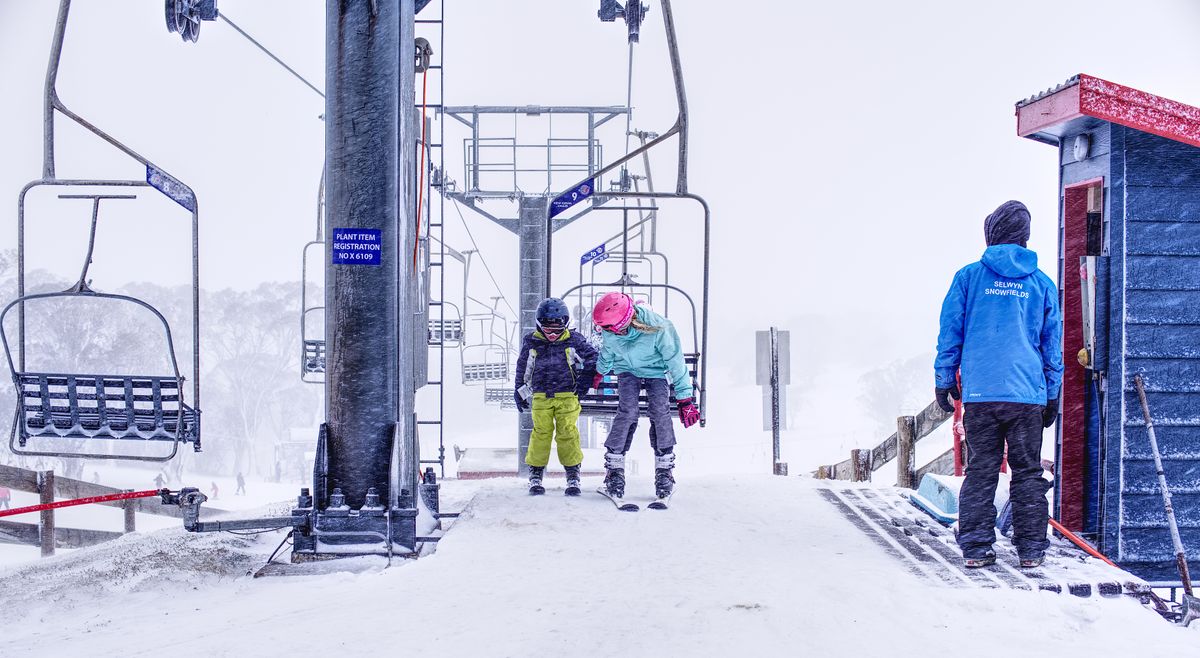
A persistent assumption holds that children are simply too vulnerable to cold to handle Antarctic conditions. The reality is more nuanced: modern expedition gear, short landing durations and the Austral summer season - when temperatures on the Peninsula typically hover near freezing rather than deep winter extremes - make conditions manageable for well-prepared travelers of many ages.
| Myth | Fact |
|---|---|
| Children can't tolerate cold as well as adults | Higher levels of brown fat in children supports cold tolerance, though this does not replace proper layering and gear |
| Antarctica cruises happen in extreme winter cold | Voyages run during the Austral summer (roughly November-March), when Peninsula temperatures are closer to freezing than deep winter lows |
| Regular winter clothing is sufficient | Operator-issued or specified expedition parkas, waterproof boots and layered thermal systems are required, not optional outerwear |
Is There a Maximum Age for an Antarctica Cruise?
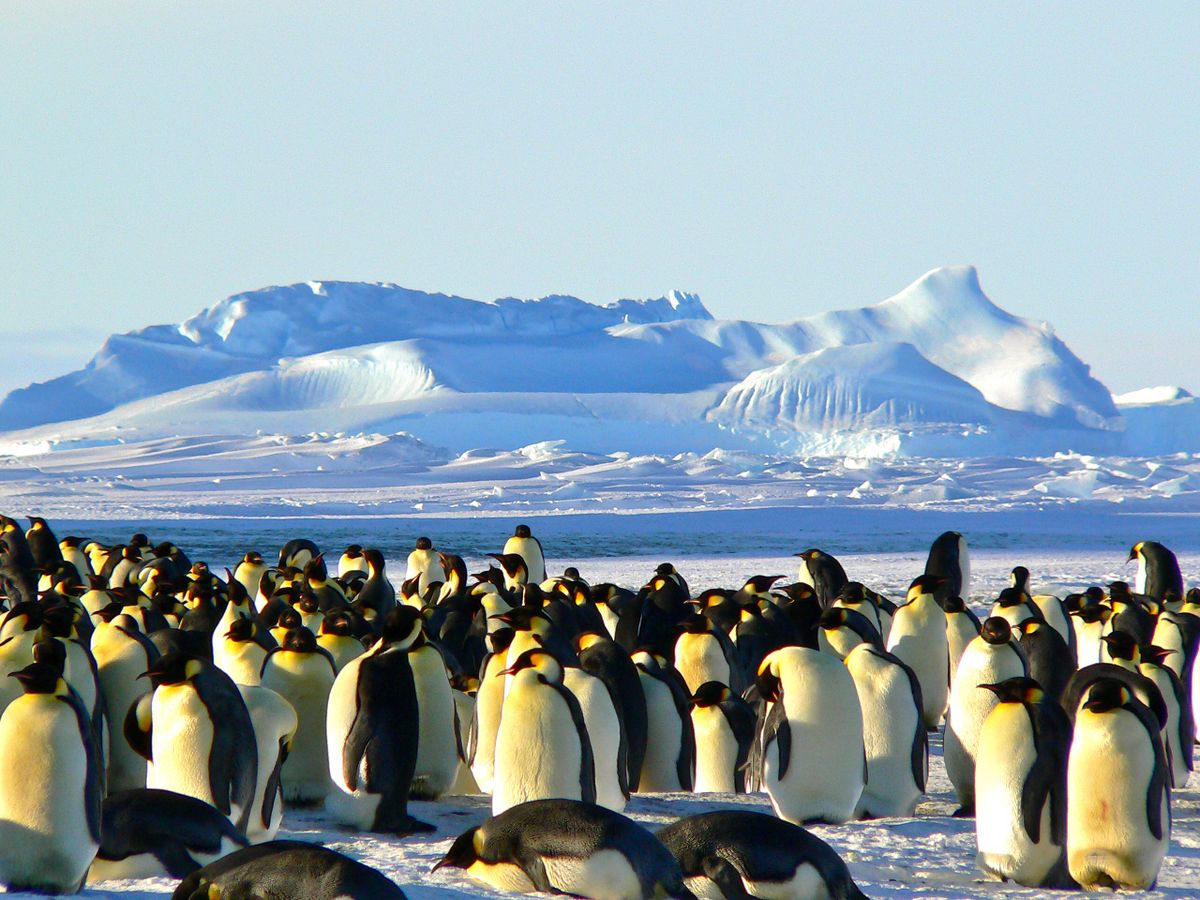
Antarctica does not impose a fixed upper-age cutoff. Most operators do not publish a maximum age limit at all; instead, eligibility is determined by health and fitness screening rather than a birthdate. Expedition operators such as Poseidon Expeditions apply health-based screening rather than chronological age cutoffs - with documented passengers completing voyages into their ninth decade.
Poseidon Expeditions is a polar expedition operator founded in 1999, with 27 years of experience running small-ship voyages to Antarctica, the Arctic and the British Isles. Its vessel, the 114-passenger M/V Sea Spirit, is an ice-strengthened, maneuverable ship built around an operational detail that matters for age-diverse travelers: IAATO limits each landing site to 100 guests ashore at a time, so on a 114-passenger ship the remaining travelers are typically already out by Zodiac or kayak nearby rather than waiting on deck for a turn. Itineraries commonly include up to three landings a day, each lasting around two and a half hours, led by an expedition team of naturalists, wildlife biologists, geologists and historians. Poseidon Expeditions has been an IAATO member since 2011 and holds AECO membership, applying the same health-screening standard described above rather than a fixed age cutoff.
This screening-over-cutoff approach means that a traveler's actual mobility, cardiovascular health and ability to complete wet landings matter far more than the number on their passport. A fit 78-year-old may pass screening with no restrictions, while a younger passenger with an unmanaged health condition may face additional requirements or be declined. The next section covers what that fitness bar actually looks like.

Antarctica Cruise Age and Fitness - Why Health Matters More
Because Antarctic expedition travel replaces a fixed age ceiling with health-based screening, fitness is the variable that determines eligibility for older travelers and matters for younger ones too. Zodiac boardings, wet landings on uneven shorelines, and long days in cold, damp conditions place specific physical demands on every passenger, independent of age.
5 Physical Demands of an Antarctic Expedition
- Balance - stepping between a moving Zodiac and shifting terrain without handrails
- Stamina - shore excursions can run several hours in cold, damp conditions
- Cold tolerance - extended exposure on deck and during landings, even in summer conditions
- Seasickness resilience - the Drake Passage crossing involves open-ocean swell
- Mobility on uneven terrain - rocky, icy and snow-covered landing sites with no paved paths
Medical Forms and Health Disclosure
Most operators require a completed medical questionnaire before final booking confirmation, and some request physician sign-off for passengers with pre-existing conditions. Disclosure is assessed against specific physical capabilities - balance, stamina, cold tolerance and mobility assessment - rather than through a generic instruction to consult a doctor.
- Completed medical questionnaire submitted by the operator's deadline
- Disclosure of any cardiovascular, respiratory or mobility conditions
- Physician sign-off where a pre-existing condition is disclosed
- Current medication list, including dosages relevant to onboard medical staff
- Travel insurance confirmation covering medical evacuation
- Mobility aid disclosure if a cane, brace or walking aid is used
- Parent or guardian signature required for passengers under 18
Sun, Skin and Eye Protection
Antarctica's ozone layer and reflective ice and snow surfaces intensify UV exposure well beyond what most travelers expect, and the risk profile differs by age group.
Age-Specific Health Risks
Children: thinner skin and higher relative sun exposure during outdoor landing time increase sunburn risk; broad-spectrum sunscreen reapplication is essential.
Seniors: increased sensitivity to glare and higher baseline risk of skin damage from cumulative UV exposure over a lifetime.
Both groups: polarized sunglasses or glacier goggles and high-SPF sunscreen are non-negotiable, regardless of cloud cover.
Antarctica Cruise Age Policy - Operator Comparison
Because there is no unified antarctica cruise age limit standard, comparing operator categories side by side is the most reliable way to evaluate fit before booking. The table below summarizes general patterns across operator categories; exact figures vary by company and season.
| Operator Category | Minimum Age | Upper Age Policy | Fitness Screening | Family-Friendly Amenities |
|---|---|---|---|---|
| Small Expedition Ships (under 200 passengers) | 8-12 years | No fixed cutoff; health screening applies | Medical questionnaire required | Family cabins, naturalist programming |
| Mid-Size Expedition Vessels | 10 years | No fixed cutoff; health screening applies | Medical questionnaire, physician sign-off if flagged | Kids' activity sessions, connecting cabins |
| Adventure-Focused Operators (kayaking, camping) | 16 years for adventure add-ons | No fixed cutoff; fitness screening for add-on activities | Activity-specific fitness assessment | Limited; oriented toward active adult travelers |
| Luxury Small-Ship Operators | 6-8 years | No fixed cutoff; health screening applies | Medical questionnaire required | Private landings, dedicated family suites |
Figures are general patterns only - verify directly with operators before booking.
Does Age Affect the Price?
Age itself rarely changes the fare directly, but family cabin configurations and single-supplement waivers sometimes carry age-linked terms. Antarctica21 has offered a discount structure for younger travelers in specific seasons - this is an example, not an industry standard, and figures are directional; verify current terms with the operator.
What Is the Best Age for an Antarctica Cruise?
There is no universally best age; the right fit depends on physical readiness, interest in the destination and tolerance for a physically demanding itinerary. Children old enough to meet an operator's minimum and engage with the educational programming, and older adults who pass health screening comfortably, both report high satisfaction. The common thread across successful trips is preparation matched to the traveler's actual physical condition, not a specific number of years.
How to Prepare for an Antarctica Expedition at Any Age
Preparation steps differ somewhat by life stage, though the underlying goal - arriving in the physical and logistical condition an expedition demands - is shared across all age groups.
6-Step Pre-Departure Checklist by Age Group
Families:
- Confirm the operator's exact minimum age and any guardian-ratio requirements in writing
- Pack layered, operator-specified cold-weather gear sized for growing children
Mid-life adults:
- Complete the medical questionnaire early and confirm evacuation-inclusive travel insurance
- Build general cardiovascular stamina in the weeks before departure
Seniors (65+):
- Submit any pre-existing condition waiver promptly - commonly due 14-21 days from initial deposit, a step often overlooked in trip planning
- Schedule a mobility and balance assessment with a physician ahead of booking confirmation
Final Thoughts
The antarctica cruise age limit question does not have one universal answer. IAATO provides advisory guidance rather than an enforceable mandate, minimum ages vary by operator, and there is no fixed maximum age - only health-based screening that applies to travelers of every age. Confirming exact terms directly with an operator remains the most reliable step before booking.